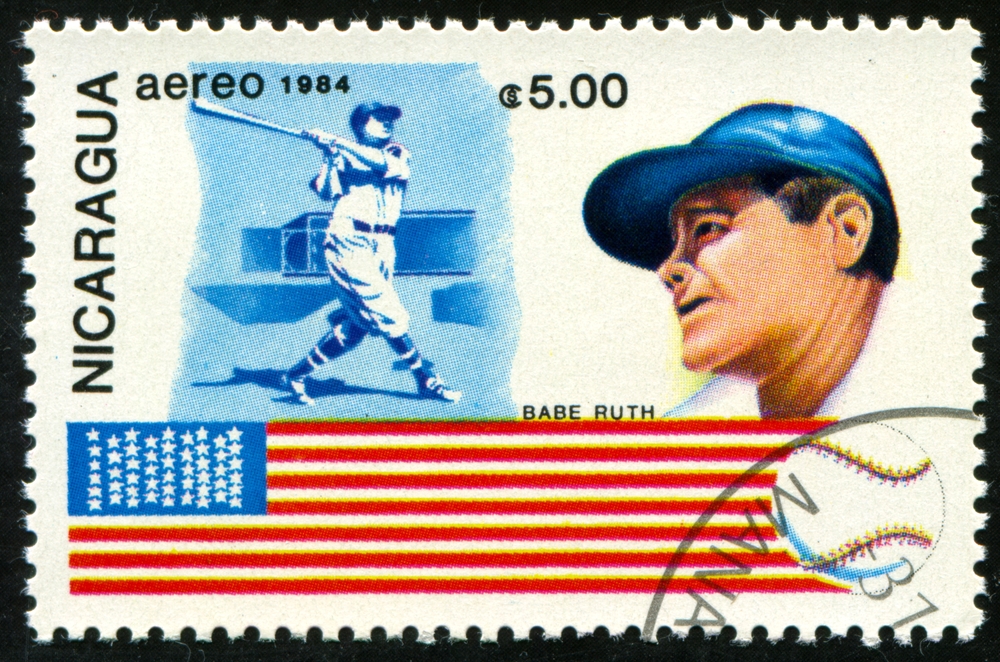
The Date: July 14th, 1934 of the Common Era.
The Venue: Detroit’s Navin Field, capable of housing 20,000 fans. It was a packed house.
The Moment: The third inning of a match where Babe Ruth sent Tommy Bridges’ 3-2 pitch careening up and off into the right field wall, marking Ruth’s 700th professional home run. This moment lead to the New York Yankees beating the Detroit Tigers with a final score of 4 to 2. Lou Gehrig had to be assisted off of the field in the first inning of the game due to severe issues with his lumbago.
Ruth’s ball flew roughly 500 feet, or around 152 meters, sailing over the bleachers of the right field and leaving the ballpark and finally landing amid several cars parked along Plum Street. Upon connecting his bat with that specific ball, Ruth was quoted as vehemently screaming to third base coach Art Fletcher that he wanted the ball and was willing to shell out cash to whoever recovered it.
Satisfied with the play, the Yankees immediately sought out the person who recovered the ball and their inquiries revealed the culprit to be Lenny Bielski, a 17-year-old boy. Bielski was brought into the ballpark to enjoy the rest of the game and a cool $20 from the Bambino.
In an interview with the Detroit Free Press, nearly four decades later in 1973, Bielski gave his account of that wild day in history. Bielski said that he was simply waiting for a friend who was running late when he heard a cry, coming down Trumbull by way of Navin Field’s bleachers, stating that Babe Ruth had scored a major home run. Bielski admitted he was just standing around when he saw the ball come over the fence and landing straight down Plum Street.
Bielski remarked that he ran track for Northwestern High School and put that running expertise to good work, diving under a car to catch the ball after it rolled under a vehicle. The next thing he knew, Bielski was being grabbed by multiple ushers and police, hefted upon their shoulders like a conquering hero and being taken into the stadium with the game put on pause. Bielski was deposited into the dugout with Babe Ruth, manager Joe McCarthy and Lou Gehrig. Bielski was able to enjoy the rest of the game from that area and the only sour spot for him would likely be missing out on Ruth’s initial desire to pay him $120 for grabbing the ball-Ruth had gone without his wallet and so Bielski only earned a $20 bill and an autographed baseball. Ruth quipped that he’d been wanting the ball of his 700th home run for quite some time.
Gehirg found a moment to speak with Bielski and mentioned that, had Bielski been just a little bit older, he would have likely raked in several thousand dollars for the ball. Gehrig was alluding to how Ruth was known to be quite the obsequious tipper, awarding the man who handed over his 600th home run ball with four- to five-thousand dollars. Bielski admitted that he wasn’t really concerned with the money but he maintained correspondence with Babe Ruth for many years after that momentous night; Bielski routinely received box seats for all of Ruth’s Detroit games.
Because newspapers from around the moment seem to contradict Gehrig’s claims of multi-thousand dollar awards for his 600th home run ball, it might be possible that Gehrig was joking around with the teen.
Even if you adjust for inflation, $20 seems like a pittance compared to the value of a home run ball autographed by Babe Ruth. One such ball from a 1933, from the premiere All-Star game, went up for auction in 2006 and was won by the family members of the person who caught it; the final price? $700,000. As an aside, Babe Ruth’s 701st home run ball was auctioned off for the price of $40,000.
Bielski passed away in 1977, at the ripe age of 60 years. Notably, his family still happens to own that unique $20 that Bielski received from Babe Ruth. Amusingly, even this specific greenback features the autograph of Babe Ruth.